


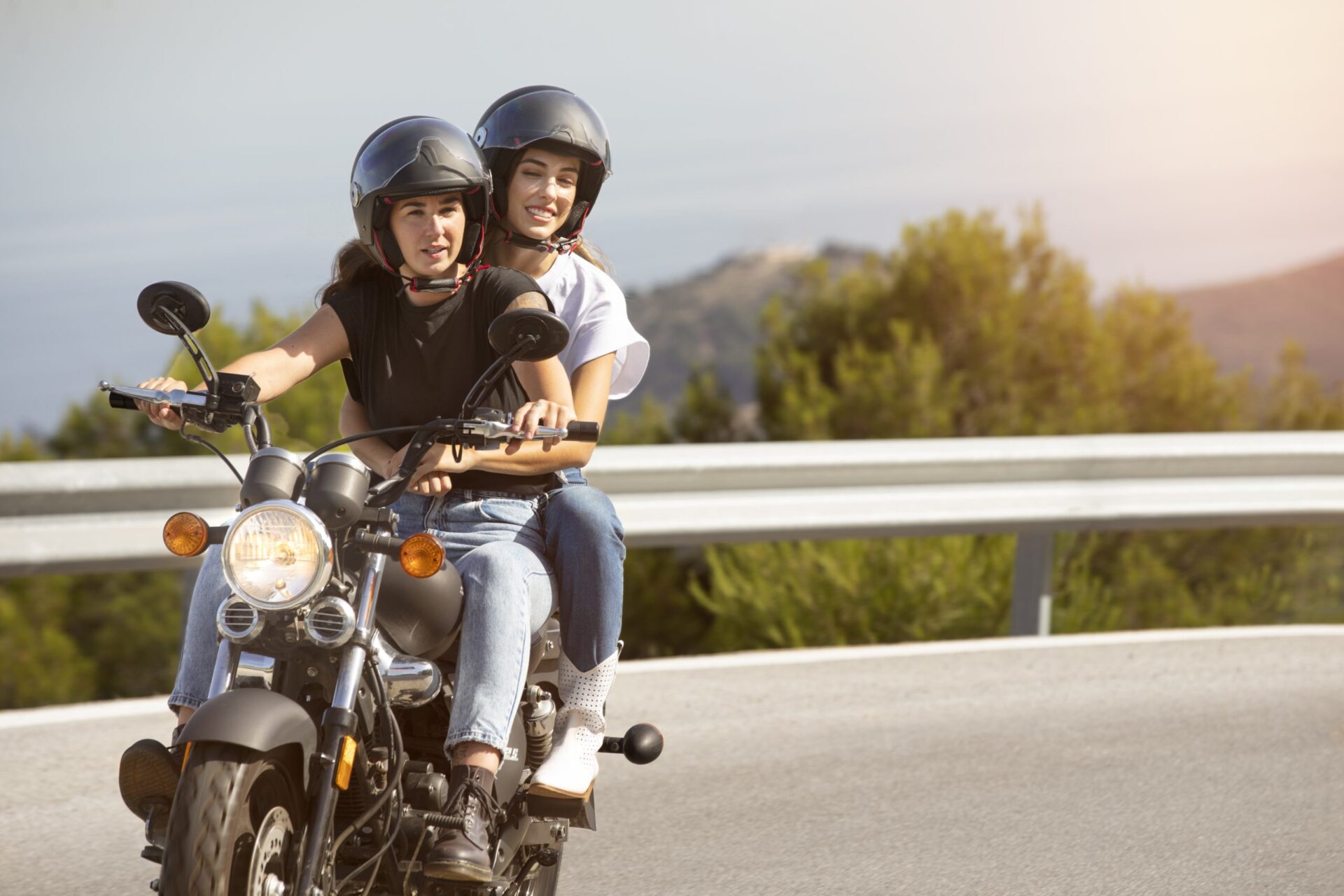
Road safety is a fundamental aspect when riding a motorcycle, and how two people should ride on a motorcycle is a very important issue. Riding a motorcycle with a passenger requires attention and consideration to ensure the safety of both occupants. In this article, we will discuss how two people should ride on a motorcycle properly.
Helmet and protective gear:
The first thing you should ensure is that both the driver and the passenger are wearing a helmet that is approved and appropriate for their size and head shape. Helmets are essential to protect the head in the event of a fall or accident. In addition to the helmet, both should wear protective gear, such as gloves, jackets and pants with protectors, boots and knee pads. Protective clothing can prevent serious injuries in the event of an accident.
Suitable seat:
Not all motorcycles are suitable for carrying two people, and if they do, they usually have a specific rear seat for the passenger. The driver and passenger must ensure that the seat is large enough to accommodate both and allow them to move comfortably.
Passenger position:
The passenger should sit comfortably in the back seat and hold on firmly to the driver. They must keep their feet on the designated passenger footrests, avoiding touching the ground or moving parts of the motorcycle while it is in motion. Keeping your feet on the footrests is essential to prevent accidents and falls.
Grip on the driver:
The passenger must hold on to the driver securely. They can do this by placing their hands on the driver’s shoulders or waist. It is essential that the passenger maintains a firm grip at all times, especially during accelerations, braking and turns. The driver, in turn, must communicate with the passenger to anticipate their movements and maintain adequate balance.
Weight distribution:
Weight distribution is crucial to maintaining the balance of the motorcycle. The driver and passenger must work together to maintain adequate balance. The driver must be attentive to the passenger’s signals and adjust their posture if necessary. Both should lean together on curves to maintain the stability of the motorcycle.
Communication and signals:
It is essential to establish clear communication between the driver and the passenger. Before leaving, agree on simple signals to indicate when to accelerate, brake or turn. Effective communication will help prevent surprises and ensure a safer trip.
Road conditions:
Both the driver and the passenger must be attentive to road conditions. The driver must adapt their speed and driving style to the pavement conditions, traffic and weather. The passenger can also help observe possible obstacles or hazards on the road and alert the driver.
Distance between vehicles:
Maintain an adequate distance between your motorcycle and other vehicles. Remember that the motorcycle may require more braking space than a car, so you must be prepared to stop in time in the event of sudden braking.
Avoid distractions:
Both the driver and the passenger must keep their attention on the road and avoid distractions. Do not use mobile devices or perform activities that may distract you during the trip.
Load conditions:
Keep in mind the load limitations of your motorcycle. Consult the manufacturer’s manual to know the maximum recommended weight to carry a passenger. Overloading the motorcycle can affect its stability and maneuverability.
In summary, riding a motorcycle with a passenger involves a number of important considerations to ensure the safety of both occupants. From the use of helmets and protective equipment to communication and proper weight distribution, following these guidelines is essential to enjoy a safe and pleasant trip on a two-seater motorcycle. Road safety is everyone’s responsibility, so always remember to drive with caution and respect traffic laws.